Source Hand Made Soft Stuffed Plush Toy for Gifts and Decor
Find 25 options for hand made soft stuffed plush toy designs suitable for promotional gifts, party favors, and home decoration. Compare customization features, materials like polyester and cotton, and certification details from verified manufacturers to select the ideal plush product for your business needs.
Key considerations
Products List




Comprehensive Sourcing Guide
Hand Made Soft Stuffed Plush Toy Sourcing Guide
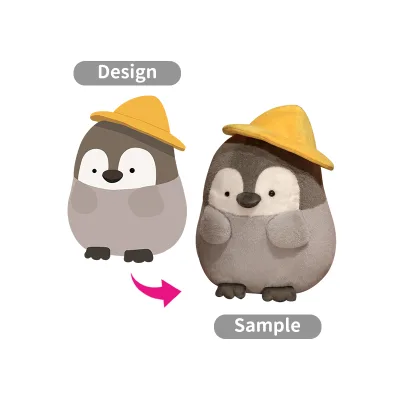
Buyers seeking hand-made soft stuffed plush toys must first recognize that customization is a primary driver for this category, with suppliers offering tailored modeling sources and weight specifications to match unique design briefs. The observed market signals indicate a strong focus on gift applications, where the soft, comfortable texture and cartoon aesthetics serve as critical value propositions for promotional and party use. Procurement teams should verify that the "hand-made" attribute is explicitly confirmed in the production process, as this often distinguishes premium items from mass-produced alternatives and impacts the final tactile quality.
When evaluating product listings, it is essential to distinguish between the various material compositions observed, such as polyester, PVC, or cotton fabric, each offering different durability and safety profiles. The data shows a wide range of sizes from 10cm to 70cm and weights varying from 180g to 0.6kg, requiring buyers to align their specific size requirements with the supplier's production capabilities. Since the product type is broadly defined as a plush toy or stuffed animal, the buyer must ensure the specific filling material, whether synthetic fibers or cotton, meets the intended softness and structural integrity standards for the target market.
Product Scope and Observed Listing Signals
The product scope for hand-made soft stuffed plush toys encompasses a diverse range of items including customized dolls, keychains, and home decorations, all sharing a common emphasis on soft comfort and cute, cartoon-like features. Listings frequently highlight the ability to incorporate customer logos and patterns, making these items highly suitable for promotional campaigns, party favors, and corporate gifting strategies. Buyers should note that the "casual" color and pattern options often allow for mixed color configurations, providing flexibility for brands seeking to create unique product lines without being constrained by rigid color palettes.
Observed listing signals reveal that production models vary significantly, with specific identifiers like HW000000 or Stuffed Animal Toy 41524152 indicating distinct design iterations that may have different material or size constraints. The packaging methods range from individual OPP bags to boxed units and bulk cartons containing 30 to 40 pieces, which directly influences logistics planning and retail presentation strategies. Procurement teams must carefully review the "customized" nature of the name and label options, as these elements are often the primary differentiators in a crowded market where the core product function remains consistent across suppliers.
Technical Specifications to Verify
Technical verification begins with confirming the specific material composition, as the supply data indicates a mix of polyester, PVC, and cotton fabric options that affect the toy's texture and longevity. Buyers must explicitly request details on the filling material, noting that some listings specify synthetic fibers while others use cotton, which impacts the plushness and washability of the final product. The height and weight specifications, ranging from 10cm to 70cm and 180g to 0.6kg respectively, require precise alignment with the buyer's design brief to ensure the physical dimensions meet the intended use case for retail or promotional distribution.
Further technical due diligence involves validating the production method, specifically confirming the "hand-made" claim through sample inspection or factory audit, as this attribute is central to the product's value proposition. The printing techniques, such as screen printing, and popular elements like sewing thread quality must be assessed to ensure the decorative details are durable and safe for children. Additionally, the standard production time of about 20 days or sample time of 3-7 working days should be factored into the supply chain schedule, ensuring that the lead times align with the buyer's inventory and marketing launch requirements.
Compliance and Safety Documentation
Compliance verification is critical for plush toys intended for children, requiring buyers to demand evidence of adherence to major international safety standards such as ASTM, EN71, and CPSIA. The observed certification data lists CE, Reach, and BSCI alongside ISO9001, indicating that reputable suppliers maintain a framework for quality management and social responsibility, but buyers must verify that these certificates are current and applicable to the specific product model being ordered. The test standards explicitly mentioned, including ASTM and EN71, serve as the baseline for safety assessments, and procurement teams should request the actual test reports to confirm that the specific batch of toys has passed these rigorous evaluations.
Beyond physical safety, buyers must ensure that the supplier's quality management systems, evidenced by ISO9001 and BSCI certifications, cover the entire production lifecycle from material sourcing to final packaging. The "high quality" claim observed in listings is subjective without supporting documentation, so buyers should insist on third-party inspection reports that validate the absence of hazardous substances and the structural integrity of the seams and stuffing. It is also important to verify that the product origin, listed as China, aligns with the buyer's import regulations and that the supplier can provide the necessary documentation to clear customs without delays or penalties.
Cost Drivers and Commercial Terms
Cost drivers for hand-made soft stuffed plush toys are heavily influenced by the level of customization required, including the complexity of the logo printing, the specific material selection, and the unique modeling source requested by the buyer. The observed MOQ range of 1 to 1000 pieces suggests that suppliers are flexible, but buyers should be aware that lower quantities often carry a higher unit cost due to the setup time for custom patterns and the labor-intensive nature of hand-made production. The production time of approximately 20 days, or variable times based on order quantity, also impacts the overall cost structure, as expedited orders may incur premium fees that need to be negotiated upfront.
Commercial terms must clearly define the packaging specifications, as the data shows options ranging from individual boxes to bulk cartons of 30-40 pieces, which affects shipping volume and cost efficiency. Buyers should negotiate the sample time of 3-7 working days and the associated costs, ensuring that the sample approval process does not delay the main production run. Additionally, the flexibility in production time and the ability to customize labels or hang tags should be factored into the total landed cost, as these value-added services often require additional coordination and resource allocation from the supplier.
Supplier Qualification and Quality Control
Supplier qualification for this category requires a thorough assessment of their ability to deliver consistent hand-made quality, as the "hand-made" attribute implies a reliance on skilled labor that can vary between batches. Buyers should verify the supplier's capacity to handle OEM and ODM requests, ensuring they have the technical expertise to translate custom designs into physical products without compromising the soft, comfortable feel that defines the category. The presence of certifications like BSCI and ISO9001 is a positive indicator, but buyers must confirm that these certifications are actively maintained and that the supplier has a track record of meeting the specific quality expectations for plush toys.
Quality control protocols must be established to monitor the production process, focusing on critical points such as the sewing thread quality, the evenness of the filling, and the durability of the printed patterns. Since the product features include "cute" and "cartoon" elements, visual inspections are essential to ensure that the aesthetic details match the approved samples and that there are no defects in the stitching or fabric. Buyers should implement a clear acceptance criteria based on the observed specifications, such as the 180g weight or 10cm height, to ensure that every unit delivered meets the agreed-upon standards before shipment.
Long-Term Procurement Checks
Long-term procurement success depends on establishing a reliable supply chain that can consistently deliver hand-made soft stuffed plush toys while adapting to changing market demands and design trends. Buyers should maintain regular communication with suppliers to monitor production capacity and ensure that the lead times of about 20 days remain stable, even as order volumes fluctuate. The ability to customize logos and patterns is a key competitive advantage, so buyers must ensure that the supplier can maintain this flexibility over time without increasing costs or compromising quality.
Continuous improvement in the supply chain involves periodic audits of the supplier's quality control processes and compliance documentation to ensure ongoing adherence to safety standards like ASTM and EN71. Buyers should also review the supplier's response to any quality issues, such as defects in the filling or packaging, to gauge their commitment to resolving problems quickly and effectively. By maintaining a proactive approach to supplier management, buyers can secure a steady supply of high-quality plush toys that meet the evolving needs of their customers and maintain a strong reputation in the market.
FAQs
Can I customize the logo and pattern on the plush toy?
Yes, customization is available for logos and patterns. You can provide your own design for the label, hang tag, or product surface. The supplier supports OEM and ODM services to meet your specific branding needs. This allows for unique product differentiation in your market while maintaining the soft and cute aesthetic of the plush toy.
What certifications do these hand made plush toys have?
These toys hold CE, En71, ASTM, CPSIA, and Reach certifications. They also comply with BSCI and ISO9001 standards. These credentials ensure safety and quality for international markets. The products undergo testing according to ASTM and En71 standards, making them suitable for gifting, parties, and home decoration while meeting strict regulatory requirements.
What is the sample time for custom plush toys?
The sample time is typically 3-7 working days. This allows for quick review of your custom design or logo application. Once the sample is approved, production begins. The standard production time is about 20 days, depending on the order quantity. This timeline helps you plan your inventory and launch schedules effectively.
What materials are used in these stuffed animal toys?
Materials vary by product model. Some use polyester or PVC with synthetic fiber filling. Others utilize cotton fabric with PP cotton filling. The main materials ensure a soft and comfortable feel. These choices support the cute and cartoon features desired for promotional gifts. The specific material depends on the selected model and customization requirements.
What is the MOQ for ordering custom plush keychains?
The MOQ is 1 PC for custom plush keychains. This low minimum order quantity allows for easy testing of new designs. It supports small batch orders for promotional events. For larger plush toys, the MOQ may range up to 1000 pieces. This flexibility helps buyers manage inventory costs and reduce risk when introducing new products.
How are the plush toys packed for shipping?
Packing options include OPP bags, boxes, or carton boxes. Standard cartons contain 30-40 pieces. Packaging can be customized according to your requirements. This ensures safe transport and professional presentation. The boxed or bagged options protect the soft material during transit. Custom packaging enhances the unboxing experience for end consumers.